
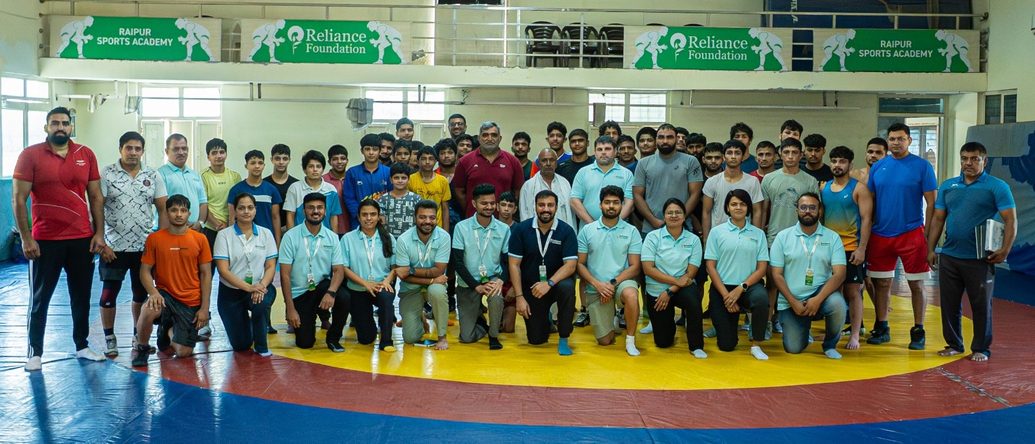
Reliance Foundation Wrestling Camp in Sonipat Builds the Next Generation of Indian Wrestlers
Young wrestlers trained under coach Damien Jacomelli during an intensive high performance camp that combined technical wrestling with sports psychology, physiotherapy, nutrition and strength conditioning support.
From May 4 to 9, Sonipat hosted the Reliance Foundation Wrestling Camp, an intensive athlete development programme designed to prepare young wrestlers for elite competition. Organised by Reliance Foundation, the camp brought together athletes, coaches and sports science experts in a collaborative high performance environment.
Led by wrestling coach Damien Jacomelli, the camp combined technical wrestling sessions with integrated support across sports psychology, physiotherapy, strength and conditioning, nutrition and athlete performance management. The objective was to help wrestlers develop not only technical ability on the mat, but also the mindset, physical resilience and recovery habits required at the highest level.
Training sessions throughout the camp focused on wrestling specific movement, positional control, explosiveness and repeated high intensity efforts. However, one of the camp’s biggest strengths was its interdisciplinary approach, exposing athletes to a complete support system similar to elite international programmes.
The sports psychology sessions focused on helping athletes develop practical mental skills that could immediately be applied in training and competition. Evening sessions included Progressive Muscle Relaxation techniques to help wrestlers release physical tension and regulate emotional arousal after demanding sessions.
Guided imagery exercises combining body scan relaxation and visualisation were also introduced to improve body awareness, mental recovery and emotional control.
Athletes additionally attended educational sessions centred on pre competition emotional management. They were introduced to evidence-based tools such as cue words, positive self-talk and confidence building through mental imagery, all aimed at improving focus and composure under pressure.
Interactive activities and wrestling specific examples helped athletes connect the concepts directly with competition situations. The overall goal was to encourage wrestlers to integrate mental skills training into their daily routines rather than viewing psychology separately from performance.
The camp also placed major emphasis on physical preparation through structured strength and conditioning sessions. Athletes worked on force production, power, movement efficiency, mobility and injury resilience, all crucial qualities in modern wrestling.
Sessions included Olympic lifting education, athletic development drills, movement mechanics and mobility integration exercises. Coaches consistently explained how strength and explosiveness directly transfer into wrestling actions such as shots, lifts, scrambles and positional exchanges.
A key focus throughout the programme was helping athletes understand the purpose behind each exercise and how structured physical preparation contributes to both performance and long term athletic development.
Athletes reportedly responded strongly to the Olympic lifting and movement sessions, with coaches noting increasing curiosity among wrestlers towards understanding and improving their physical preparation.
Nutrition support also formed an important component of the camp. The nutrition team worked closely with hotel kitchen staff to modify menus according to wrestler requirements while organising structured pre and post training meals to support recovery, hydration and weight management. Daily body weight monitoring was conducted to assess sweat loss, hydration status and acute weight fluctuations, allowing individualized hydration and electrolyte strategies for athletes.
Educational sessions such as “Build My Thali” and “Safe Supplementation & Anti-Doping Awareness” helped athletes better understand balanced nutrition, responsible supplement use and performance focused food habits. Wrestlers also received guidance on portion sizes, hydration, recovery nutrition and limiting foods that may negatively impact performance.
Physiotherapy and sports medicine support formed another important part of the camp. Assessments conducted on the opening day identified recurring issues among wrestlers, including cervical spine discomfort, shoulder pain, knee stress and upper trapezius tightness.
Mobility restrictions were also observed in thoracic rotation, hip internal rotation and ankle dorsiflexion, all of which can impact wrestling efficiency and increase fatigue during high intensity exchanges.
To address these concerns, the physiotherapy team introduced daily movement preparation exercises before training. These included thoracic mobility flows, hip rotation drills, ankle mobility work and neck activation routines.Daily cool down stretching sessions were also implemented to improve recovery and muscle lengthening after practice.
Recovery systems formed a major part of the camp structure. Wrestlers had access to group recovery sessions twice a week along with individual physiotherapy support throughout the day. A dedicated physio station was also available before training sessions for athletes requiring taping or treatment assistance.Recovery methods used during the camp included ice baths, Normatec compression therapy, dry needling, cupping therapy, soft tissue release and rehabilitation exercises.
According to the physiotherapy staff, early intervention through mobility work, structured recovery and targeted strength development would play an important role in reducing injury risk and maintaining long term performance.
Beyond wrestling technique and physical conditioning, the camp highlighted the growing importance of integrated athlete development systems in Indian sport. Modern success increasingly depends on a combination of technical skill, mental resilience, recovery management and sports science support.
Through the Sonipat camp, Reliance Foundation created an environment where young wrestlers experienced a holistic high performance programme aligned with international standards. With major international competitions ahead, including pathways towards the Asian Games, the camp provided athletes with valuable exposure to the demands of elite preparation.
The interdisciplinary support team at the camp included
- Arjun Jain - Senior Strength & Conditioning Coach
- Durva Vahia - Performance Manager
- Vaishali Pawar - Sports Nutritionist
- Jaini Nandu - Senior Sports Psychologist
- Shruti Gharat - Senior Sports Physiotherapist
- Nirant Patil - Sports Physiotherapist
- Atish More - Strength & Conditioning Coach
all of whom contributed towards building a complete athlete support ecosystem throughout the camp.
Your Comments